Hardwood Flooring Blog

Open post Reclaimed Flooring Arizona

Why Perfect Hardwood Floors Start Beneath the Surface: The Critical Role of Subfloor Prep

When homeowners picture their dream hardwood floors, they usually focus on the surface: the rich oak grain, the deep stain tone, or the sleek matte finish. But as the owner of Mystique Hardwood Floors, I’ll tell you a secret that every master craftsman knows:

Your finished hardwood floor is only ever as good as the subfloor beneath it.

You can buy the highest-grade solid wood or premium engineered planks on the market, but if they are installed over an uneven, unflattened subfloor, the installation is compromised from day one. Here is why subfloor prep—specifically grinding down high spots and filling in low spots—is the most crucial step of any hardwood flooring project.


What Happens When You Skip Subfloor Prep?

Subfloors (whether concrete slabs or plywood) are rarely flat out of the box. Concrete slabs develop humps and dips as they cure, while wooden subfloors can warp, sag, or develop ridge seams over time.

If hardwood is laid over an uneven surface without correction, several long-term problems occur:

  • Hollow Sounds & Vertical Movement: Dips in the subfloor leave empty pockets underneath glued or floating planks. Every time you step on these areas, the wood flexes down, creating an annoying hollow sound or noticeable springiness.
  • Squeaking & Popping: In nail-down installations, continuous flexing pulls nails or cleats loose from the subfloor, leading to persistent squeaks.
  • Board Separation & Buckling: High spots act as fulcrums. As planks ride over a hump, pressure points form, forcing tongue-and-groove joints to strain, crack, or gap over time.
  • Premature Finish Wear: Uneven boards sit at slightly different heights (known as lippage). The raised edges catch foot traffic, vacuum heads, and furniture legs, wearing out the top protective finish prematurely.

The Standard for Flatness: Industry Benchmarks

In the flooring industry, “flat” has an exact mathematical definition set by the National Wood Flooring Association (NWFA).

Installation Type NWFA Flatness Tolerance Standard
Nail-Down Hardwood Maximum variation of 1/4″ in 10 feet (or 1/8″ in 6 feet)
Glue-Down & Floating Hardwood Maximum variation of 3/16″ in 10 feet (or 1/8″ in 6 feet)

How Mystique Hardwood Floors Preps a Subfloor

Flattening a subfloor isn’t about making it perfectly level relative to the horizon—it’s about making it perfectly flat so the wood rests uniformly across the entire surface. This requires a two-pronged mechanical approach:

1. Grinding High Spots (Taming the Humps)

High spots on concrete slabs are mechanically ground down using heavy-duty diamond-head concrete grinders equipped with HEPA dust-extraction systems. On plywood subfloors, high seams and ridges are leveled using heavy-grit mechanical sanders to create a smooth transition across joists.

2. Filling Low Spots (Eliminating the Dips)

Low areas require filling to create a level plane. For concrete, we apply high-strength, cementitious self-leveling compounds or fortified patching compounds after applying a specialized bonding primer. For wooden subfloors, low spots are carefully shimmed or patched with engineered subfloor levelers designed not to crack under flex.


Long-Term Benefits of Proper Subfloor Leveling

  1. Flawless Aesthetics: Planks lie completely flush, giving your home that smooth, seamless, high-end look.
  2. Quiet Acoustic Performance: Eliminates hollow reverberations and friction-induced squeaks.
  3. Valid Manufacturer Warranties: Virtually all major hardwood manufacturers specify NWFA subfloor flatness requirements in their warranty terms. Proper prep protects your investment.
  4. Maximized Lifespan: Eliminates uneven stress points, allowing your floors to expand and contract naturally for decades.

Frequently Asked Questions About Subfloor Prep

Can underlayment pad hide an uneven subfloor?

No. Foam or felt underlayment provides moisture protection and sound attenuation, but it compresses under weight. It cannot compensate for structural dips or high spots exceeding 1/8 inch.

Is subfloor grinding and leveling necessary for both solid and engineered hardwood?

Yes. While engineered hardwood handles minor humidity fluctuations better than solid wood, both floor types require a flat foundation to maintain structural joint integrity and prevent hollow spots.

How long does subfloor leveling take to dry?

Depending on the depth of the dip and the product used, self-leveling compounds typically cure within 4 to 24 hours before hardwood installation can safely proceed.
The Mystique Commitment

At Mystique Hardwood Floors, we don’t cut corners on the steps you can’t see. True craftsmanship lies in the preparation. By ensuring your subfloor meets rigid tolerance standards before installation begins, we guarantee a quiet, solid, and beautiful hardwood floor built to last a lifetime.

Ready to start your hardwood flooring project? Contact Mystique Hardwood Floors today for an expert consultation and comprehensive site inspection.


Open post Wood Flooring In Kitchen

Picking Your Perfect Plank: A Guide to Hardwood Species & Cost


Choosing to install hardwood floors is an exciting step in making your home feel warm, inviting, and uniquely yours. But once you start browsing your options, you’re faced with a big question: Which wood species is right for my space?

Different types of wood bring their own unique personalities to a room. Some handle the daily hustle of kids and pets beautifully, while others offer a sleek, modern luxury. To help you narrow down your choices, let’s break down the most popular domestic wood species used in hardwood flooring, how they perform, and what you can expect when it comes to your budget.

The Big Four: Comparing the Most Popular Species

1. Oak (Red & White) – The Timeless Standard

Oak is the most popular hardwood flooring for a reason. It features strong, classic grain patterns that do a fantastic job of hiding minor scratches and dents from daily wear and tear.

  • Red Oak has warmer, pinkish undertones and a more dramatic grain pattern.
  • White Oak is slightly harder than Red Oak, featuring cooler, golden-brown tones and a linear grain that fits perfectly in contemporary, modern, or coastal designs.

2. Hickory – The Ultra-Durable Choice

If you have a busy household with heavy foot traffic, large pets, or kids tracking in desert grit, Hickory is your best friend. It is one of the hardest domestic woods available, making it incredibly resistant to dents. Visually, Hickory is famous for its high contrast, showing off beautiful variations between light creams and deep, dark browns. It looks spectacular if you love a rustic or character-rich aesthetic.

3. Maple – The Clean & Modern Option

Maple offers a very different look from Oak or Hickory. It has a much smoother, subtle grain pattern, creating a clean, consistent canvas across your floor. Because it’s so uniform and light in color, it makes spaces feel large, bright, and airy. It’s a favorite for minimalist and Scandinavian-inspired homes.

4. Walnut – The Luxurious Showstopper

Walnut is a softer wood, but what it lacks in pure hardness, it more than makes up for in pure elegance. It features deep, rich chocolate-brown tones and stunning, swirling grain patterns. Because it can scratch a bit easier than Oak or Hickory, it’s best suited for lower-traffic areas or households looking for a high-end, sophisticated look.

How Do They Wrap Up in Cost?

Your overall investment depends on whether you opt for solid or engineered construction, plank width, and your specific subfloor needs. However, the species itself plays a major role in raw material pricing. Here is how they generally compare from most budget-friendly to premium:

Wood Species Relative Cost Best Suited For
Red Oak $ (Most Budget-Friendly) High-traffic family homes, versatile design styles, and excellent overall value.
White Oak $$ (Moderate) Modern, contemporary, or transitional homes looking for neutral, trendy tones.
Maple $$ (Moderate) Bright, minimalist spaces where a clean, subtle grain pattern is preferred.
Hickory $$$ (Moderate to High) Busy households requiring maximum dent resistance and a bold, rustic look.
Walnut $$$$ (Premium) Luxurious spaces, formal rooms, and homeowners wanting deep, natural dark wood tones.

Note: Supply chain availability and current market demand can cause species pricing to fluctuate, but Oak consistently remains the benchmark for affordability, while Walnut is valued as a premium luxury choice.

Balancing Hardness and Practicality

When comparing these woods, a great industry tool to keep in mind is the Janka Hardness Scale. It measures how much force it takes to embed a small steel ball into the wood. The higher the number, the more resistant the wood is to dents.

  • Hickory: ~1,820 (Toughest against impact)
  • Maple: ~1,450 (Strong and resilient)
  • White Oak: ~1,360 (Excellent daily durability)
  • Red Oak: ~1,290 (The industry benchmark for strength)
  • Walnut: ~1,010 (Softer, best treated with a bit more care)

Keep in mind that hardness isn’t everything! A highly figured grain (like Oak or Hickory) is incredibly forgiving because it naturally hides minor surface scuffs, whereas a very smooth wood (like Maple) will show them more easily in direct sunlight, even though the wood itself is technically harder.

Let’s Find the Right Fit for Your Home

The perfect wood species is the one that aligns with your design vision, your daily routine, and your target budget. Whether you love the unmatched durability of Hickory or the classic flexibility of White Oak, seeing these samples in your home’s natural lighting makes all the difference.

Ready to compare these beautiful wood species in person? Reach out to our team today to find the ideal match for your next flooring upgrade!

Open post Engineered Hardwood Flooring Phoenix

Hardwood in the Heat: Why Engineered Flooring is a Desert Essential


When you live in the Phoenix Valley, you know that the climate dictates almost every choice you make for your home—from your AC unit to your landscaping. When it comes to flooring, the “Solid vs. Engineered” debate is a big one.

While solid hardwood remains the gold standard for many—offering a lifetime of character and the ability to be refinished for generations—engineered wood has emerged as a high-performance partner for desert living.

Here is why engineered wood is such a strong contender for your Phoenix home.

Built for the “Dry Heat”

The biggest challenge for any wood floor in Arizona is the low humidity. Wood is a natural material that reacts to moisture; in our bone-dry summers, solid wood planks can sometimes shrink, leading to tiny gaps between boards.

Engineered wood is engineered for stability. Its multi-layer core is designed to resist that natural urge to shift or shrink. This means that even when the humidity hits single digits, your floors stay tight, flat, and beautiful.

The Concrete Connection

Most homes in our neck of the woods are built on concrete slabs. Installing solid wood on concrete requires a bit more prep work to manage moisture and attachment.

Engineered wood, however, was practically made for concrete. Its structural design allows it to be installed easily over slabs, making it a versatile and cost-effective way to get that authentic wood look in any room of the house.

Performance Without Compromise

Choosing engineered wood doesn’t mean you’re settling for “imitation” wood. The top layer is 100% genuine hardwood. You get the same rich grains, knots, and textures of Oak, Walnut, or Hickory, but with a “backbone” that is better suited for the high-temperature fluctuations we see in the Southwest.

Which is Right for You?

  • Solid Hardwood is perfect if you want a floor that can be sanded and refinished many times over the next 50 to 100 years. It’s an investment in the long-term history of your home.
  • Engineered Wood is the go-to for those who want maximum stability against the desert dry-rot and a seamless installation over concrete subfloors.
Open post wood flooring scottsdale

Beyond the Heat: The Hidden Science of Hardwood in the Arizona Desert

When you think of a home in the Sonoran Desert, your mind likely jumps to cool Saltillo tile or modern polished concrete. Hardwood is often viewed as a “coastal” or “northern” luxury, with many Phoenix homeowners fearing that the desert sun will turn their beautiful planks into a warped, cracking mess within a single season.

However, hardwood in Phoenix isn’t just possible—it’s an incredible design choice, provided you understand the unique physics of the desert. Here is the reality of living with wood floors when the temperature hits 115°F.

1. The Humidity War: Equilibrium Moisture Content

In more humid climates, the primary concern is wood expanding and buckling. In Phoenix, we face the opposite: contraction. Wood is a hygroscopic material, meaning it constantly exchanges moisture with the air.

In the Valley, our indoor humidity often drops below 20%. This causes wood to lose its internal moisture, leading to “gapping” (unsightly spaces between planks). Professionals often suggest maintaining a consistent indoor environment. Investing in a whole-home humidifier integrated into your HVAC system can keep your floors stable and prevent the wood from becoming brittle and prone to splintering.

2. The Case for Engineered vs. Solid Wood

While “Solid Hardwood” sounds like the premium choice, it is often the riskier choice for Arizona. Solid planks are one continuous piece of wood, making them highly reactive to moisture changes.

The Desert Choice: Engineered hardwood is the unsung hero of the Southwest. Because it is constructed in cross-grain layers with a real wood veneer on top, it possesses a structural “tension” that resists shrinking and warping much better than solid wood. It provides the exact same look but with far more stability on a hot concrete slab.

3. The UV Factor: Protecting Your “Sunburn”

The Phoenix sun is legendary for its intensity. Windows that aren’t treated with high-efficiency UV coatings can cause “sun-bleaching” on your floors in a matter of months. If your home has floor-to-ceiling windows, choose wood species that are naturally more light-stable (like White Oak) rather than light-sensitive woods (like Brazilian Cherry or Walnut), which can fade dramatically. Always ask your contractor about UV-resistant finishes to act as a “sunscreen” for your floor.

4. Subfloor “Sweating” during Monsoon Season

Arizona homes are almost exclusively built on concrete slabs. During the July and August monsoons, the sudden increase in ground moisture can cause concrete to “breathe” or sweat. If wood is glued directly to the slab without a high-grade moisture barrier, that trapped vapor can cause the wood to cup or peel.

The Fix: Never skip the vapor barrier. Whether it’s a liquid-applied membrane or a heavy-duty poly-film, this layer is the only thing protecting your investment from the volatile Arizona soil.

5. Species Selection: Hardness Matters

Between the fine desert sand tracked in from outside and the active indoor lifestyles we lead to stay out of the heat, your floors take a beating. Look at the Janka Hardness Scale. Species like Hickory or Hard Maple are much better at resisting the “micro-abrasions” caused by the dust and grit common in the Valley.


Final Verdict

Hardwood in Phoenix is a bold, beautiful way to add warmth to a desert home. It breaks the “cold” feeling of stone and tile while providing a hypoallergenic environment that’s easy to clean after a dust storm. By choosing the right material and respecting the local climate science, your floors will remain a timeless centerpiece for decades.

Looking for a consultation on your next project? We specialize in navigating the specific challenges of Arizona flooring. Contact us today to see our desert-ready samples.

Open post Wood Flooring In Kitchen

How to Maintain Your Wood Floors

Refinishing wood floors revives any living space in a major way. Yet the pride and luxury of having a refinished floor by Mystique Hardwood Floors also comes with the simple task of keeping it spotless and eye-catching.

When you first had your hardwood floor finishing done, you probably noticed how elegant and lustrous the floor appeared. But usually, after about three to five years, the flooring starts to lose its luster.

Here are some tried and true ways to maintain your wood floor refinishing, extending its life while avoiding a wood floor’s most common detriments.

Daily Upkeep for Hardwood

While sweeping, mopping, and vacuuming might not be the most fun activity you can do, keeping your hardwood floor in ship-shape will ultimately protect your long-term investment of having an elegant space.

The best way to care for your refinished hardwood floor starts with replacing your every-day cleaning tools with the ones that work best on wood finish without scratching the grains or dulling the shine.

Brooms

When using a broom on newly refinished wood floors, the types of bristles you use are crucial. As brooms are ancient inventions that come in all shapes and sizes, picking the right one depends squarely on the surface you aim to clean.

For delicate wood floors, the best brooms in the business are either rubber or synthetic (or a combination of both) bristles. Straw brooms, on the other hand, can fall apart over time and scratch surfaces more easily.

For hair or stringy particles, rubber bristle brooms are the best choice for pet owners who find themselves tasked with cleaning up cat or dog hair. Without compromising their flooring’s lifespan and appearance, rubber bristles have a way of sliding along the floor without scuffing, all the while grabbing and clumping hair together.

For dust, synthetic bristle brooms are your best bet, since rubber bristles are too spaced to sweep smaller particulates. The softer the bristles, the longer your refinished flooring will last.

Tip: Take off your shoes before sweeping. Do this so you don’t track dirt around while you sweep. Think as if you’re entering a temple and your floor is the shrine.

Microfiber Dust Mops

Sometimes sweeping with an old, stiff-bristled broom can do more harm than good to your hardwood floor. Generic dust mops also have the potential to scratch and fade your refinished hardwood’s sheen.

That’s why it’s best to go with a microfiber dust mop. Unlike traditional mops and brooms that just push particles into neat piles, microfibers trap dust into their dense braids of chenille. They’re engineered to use static electricity to attract and snatch up negatively charged dust particles as you run the mop along the grain.

After using your microfiber mop, be sure to wash and dry it before using it again. Throwing the mop the dryer can recharge the microfibers and their static-electric power.

Tip: Dust tends to build up especially around stationary furniture like desks, couches, and chairs. Develop the habit of moving your furniture out of the way to sweep or mop the surface. By doing this, dust bunnies won’t get ingrained in your flooring, making it easier to clean week after week.

Bare Floor Setting on Your Vacuum

While sweeping is more energy efficient and less time consuming, vacuuming is a great way to touch up the floors once a week. Make sure to use a vacuum with a bare floor setting (most vacuums will have one).

When a vacuum activates bare floor mode, there’s clearance between the floor and vacuum bristles. The benefit of vacuuming is also to reach hard-to-get places between furniture.

Tip: Notice areas that collect a lot of dust, like drapes, doors that lead to the outside, spaces underneath electronics, or other heavy furniture. Try to keep these areas dust free as a preemptive measure to keep floors spotless and lustrous.

Avoiding Scuffs and Scratches on Wood Floors

For getting the most out of your hardwood floor refinishing, cleaning is essential. However, there are some blemishes and marks that no amount of sweeping or vacuuming can fix.

UV Rays

Sunlight can age a floor the way it can age a painting hanging on your wall next to your window, yet a refinished floor’s appeal is to reflect light in a dazzling way. In that case, invest in drapes that will let in enough ambient light while blocking UV Rays.

Pets

Be sure to trim the nails on your cat, dog, or any other pet you let roam around the house. Doing so will reduce the minuscule scratches that, over time, become worn-out areas in your refinished floor.

Footwear

Maybe you have kids who like to run across your hardwood floor in soccer cleats. Or maybe you’re running to the garage in high-heels because you’re late for work. Or maybe your most comfortable work shoes leave hard-to-scrub scuff marks in your wake.

A well-traveled floor under rough footwear can wear down a new finish more than anything. If bare-footing your way around the house isn’t your style, here are at least some types of footwear to avoid that will better maintain your flooring:

  • Soccer, golf, or baseball cleats
  • Boots
  • High-heels
  • Shoes with black rubber soles

Other Protective Measures

wood floor refinishing phoenix
Establish a buffer between your wood or metal legs of furniture by adding a rug into the mix. A small- or medium-sized rug goes a long way in protecting the wood floor without stealing the show. Furniture sliders, which often have felt-tipped bottoms, can ease the movement of a piece of furniture from one corner of the room to the next, without causing abrasions or tread marks.

If refinishing your wood floor is next on your list of honey-do’s, be sure to consult Mystique Hardwood Floors for your next project. We offer high-quality and long-lasting refinished floors to set your home apart from the rest.

Open post

Picking Out Hardwood Floors

Benefits Of Hardwood Floors

Deciding on the flooring inside of a home is a fascinating time. There are so many options; hardwood, carpet, vinyl, linoleum, laminate, tile, and so many others. Each flooring offers different benefits for certain people. Hardwood floors radiate natural beauty, and because of the enormous variety, wood floors can match any decor. Modern chic or rustic cottage, there’s a wood flooring option for any interior design. Wood floors do require more thought and consideration because they need to be properly maintained and taken care of, or they will not provide the desired look.

Wood Finish

After deciding on wood flooring, there are a lot of other options associated with this material. Choosing on the finish is an important aspect and will alter the installation process. Unfinished wood floors are installed first, and then several layers of protective finishing are applied. This option is beneficial for places in the home like the kitchen. When the finish is applied after installation, it helps to seal up the gaps between the pieces of wood, providing more water protection. Finished wood floors are quick and easy to install; there is no dust, fumes, or dry time. After the floor is installed, it can be walked on immediately, as opposed to unfinished floors, which require sanding, staining, and finishing. Both options are just fine and will get the same results. It just depends on the application and personal preference.

Wood floors require more maintenance than other floors, and that is especially important for newly finished wood floors. Because hardwood is an entirely flat surface, there is no place for dirt and other debris to hide, which makes daily upkeep necessary. It is also a good idea to keep in mind the type of wood that is installed and how durable it is, some hard-bristled brooms can scratch the wood when used over and over again. Rubber or other synthetic bristles are a better option for softer woods and to protect the finish. Vacuuming wood floors is also a big no-no, but if necessary, choose the bare-floor setting to ensure the rough vacuum bristles don’t damage the floor. There are many other tips and tricks to protecting wood floors and ensuring they last longer, but eventually, all wood floors need to be sanded and refinished.

Engineered Wood Or Solid Woodwood flooring by mystique hardwood floors

Both are excellent choices and offer different benefits. Solid wood flooring is all real wood planks. Engineered wood floors are many layers of wood glued together. Solid wood is a reliable option and provides excellent stability but is not the best choice for humid areas. Engineered wood can be more versatile but can only be sanded and refinished once or twice. Solid wood can be sanded and re-finished many times. Depending on the application and personal preference, both options are great.

Wood Type

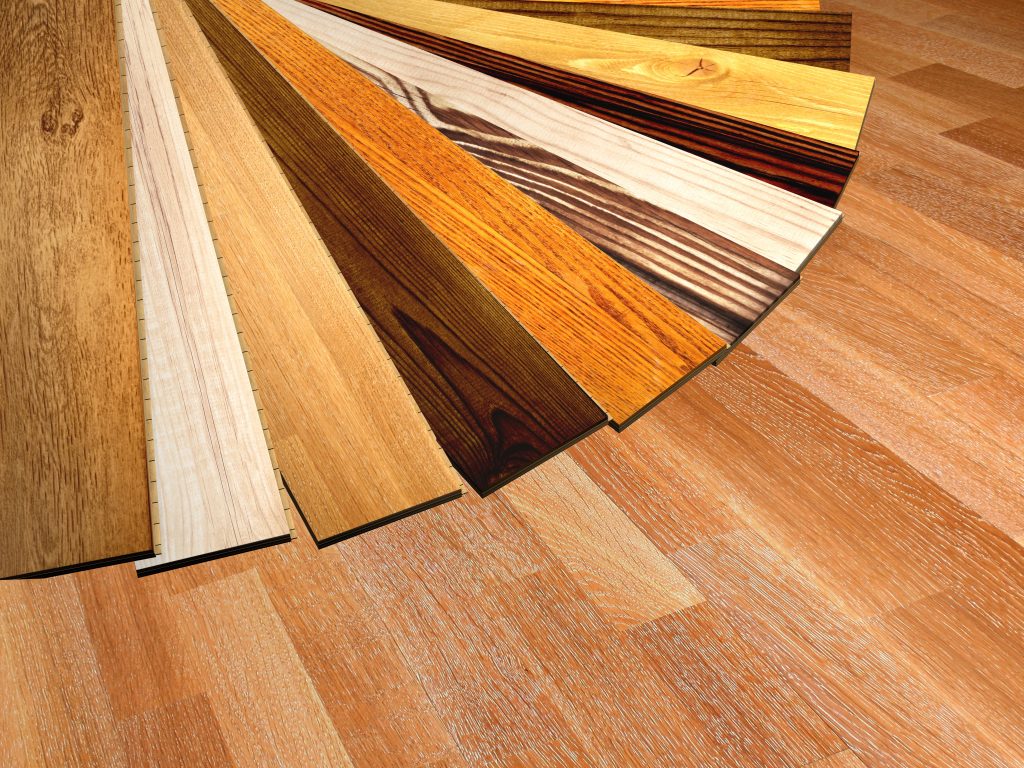
This choice is probably the most exciting and fun part of getting hardwood floors. Picking out which species of wood will look best. The most common types of wood flooring are oak, maple, and cherry. These three are good options because they are widely available, relatively hard, and can be stained to a more specific color. Other options include bamboo, walnut, ash, and mahogany. These are also great options, slightly more expensive, but can offer a look and feel that others can’t. And then there are the more costly and exotic options; teak, jarrah, and mesquite. These hardwood options provide elegance and warmth that is not naturally provided by other wood options. It can be challenging to decide, but gathering a few samples to take home can always help.

Wood Floor Style

After choosing the species of wood, the board style must also be decided on. Typically most wood floors use narrow strips of wood. These narrow strips can help create the illusion of more space and help a room appear larger and more open. Planks are another popular option because they provide a more rustic look. A third option that is less common but gaining popularity is squares or rectangles. This type of hardwood flooring offers a very formal look, great for entryways.

Wood Hardness

Different wood species have different hardness levels. Red oak is considered the median for hardness at a level of 1290. Softer woods like teak or black cherry at 1000-1010 will scratch and dent much easier. Harder woods like jarrah at 1910 or Brazilian cherry, at the top of the scale with a hardness of 2350, will not scratch and dent easily. Choosing a wood species should take into account lifestyle. Homeowners with pets and children might consider a stronger wood that would be more resilient to dogs’ nails and children playing. Laying down rugs and pet beds can provider a softer place for pets to lay down and have some traction.

Wood Floor Underlayment

Before the wood floors are installed, there is an underlayment laid down. Cork and foam provide an excellent level of insulation and help to reduce the noise level. Vinyl and plastic underlayment is suitable for areas of higher moisture, like the kitchen. Hardwood floors are an excellent choice for any space in a home except for bathrooms and laundry rooms. Too much moisture is not suitable for hardwood and will cause it to warp and possibly mildew. Hardwood floors require a little more maintenance and care than other floor options like linoleum or carpet.

Hardwood Floors Experts

The staff at Mystique Hardwood Floors are experts in wood flooring. With years of experience and knowledge, our team is always happy to help you decide on the best wood flooring option. We work with you to establish the best wood choice, style, and other details before our craftsmen professionally and expertly install your wood flooring. Staining before or during installation is up to you, and we are happy to do either. And don’t worry if your floor gets a little damaged later on down the road, our team also provides repairs, refinishing, staining, and replacements. Call Mystique Hardwood Floors today for a quote on a brand new, beautiful hardwood floor!

Open post wood flooring phoenix

Advantages of Hardwood Floors and How To Maintain Them

Reasons To Get Hardwood Floors

For many homeowners, choosing a style of flooring can be a difficult decision. There are so many options, and each type of flooring has different benefits and drawbacks. Flooring, no matter what kind, is an investment that will be in a home for a long time. Carpet is a trendy choice for homes, apartments, offices, and a lot of other applications. But carpet has a lot more drawbacks to it compared to hardwood. Carpet harbors more dirt and germs, which can give off a musty odor. It stains easily and becomes dirty and dingy over time.

Hardwood floors have quite a few benefits, not only for a home but also for the whole family. It is always a good idea to talk and work with hardwood flooring contractors when deciding to put hardwood floors in a home. But all the benefits that come with having wood floors make the investment all worth it. And because the floors are long-lasting, the benefits from them are continuous.

Clean Floors

Carpet consists of thick fibers that attract and store dirt, dust, allergens, and a lot of other things that get tracked into a home. Hardwood floors allow for easy and sanitary cleaning. And because of these hardwood floors are a better option for families that have allergies or asthma.

Floor Durability

In high traffic areas, carpets back begin to wear out and need to be replaced after a few years. This process can be costly because, more than likely, the entire carpet needs to be ripped up and replaced. With hardwood floors, they can be sanded, re-finished, and fixed to look brand new. Any dings or dents on the floor can be easily repaired, and because they are laid in small sections, if part of the floor does need to be replaced, it is not as big of a hassle. There are many flooring options, including eco-friendly variations, and this flooring will last for years and years.

Hardwood Aesthetics

Hardwood floors have been a popular choice for a very long time. They are an excellent option that can be utilized in many ways. Using different types of woods, shapes, and designs all create a unique and beautiful look. Hardwood floors add value to homes as most homeowners like the look of wood flooring.

Maintaining A Hardwood Floor

While sweeping, mopping and vacuuming might not be the most fun activity to do and keeping a hardwood floor clean will ultimately protect the long-term investment of having an elegant space. The best way to care for a hardwood floor starts with replacing every-day cleaning tools with the ones that work best on wood finish without scratching the grains or dulling the shine.

Broomswood flooring by mystique hardwood floors

When using a broom on newly refinished wood floors, the types of bristles being used are crucial; different brooms should be used to clean different surfaces. For delicate wood floors, the best sweepers in the business are either rubber or synthetic (or a combination of both) bristles. Straw brooms, on the other hand, can fall apart over time and scratch surfaces more easily.

For hair or stringy particles, rubber bristle brooms are the best choice for pet owners who find themselves tasked with cleaning up cat or dog hair. Without compromising their floor’s lifespan and appearance, rubber bristles have a way of sliding along the floor without scuffing, all the while grabbing and clumping hair together.

For dust, synthetic bristle brooms are the best choice, since rubber bristles are too spaced to sweep smaller particulates. The softer the bristles, the longer the refinished floor will last.

Microfiber Dust Mops

Sometimes sweeping with an old, stiff-bristled broom can do more harm than good to a hardwood floor. Generic dust mops also have the potential to scratch and fade the sheen on a finished floor. That’s why it’s best to go with a microfiber dust mop. Unlike traditional mops and brooms that just push particles into neat piles, microfibers trap dust into their dense braids of fabric. They’re engineered to use static electricity to attract and snatch up negatively charged dust particles.

After using a microfiber mop, be sure to wash and dry it before using it again. Throwing the mop in the dryer can recharge the microfibers and their static-electric power.

Bare Floor Setting On The Vacuum

While sweeping is more energy-efficient and less time consuming, vacuuming is a great way to touch up the floors once a week. Make sure to use a vacuum with a bare floor setting (most vacuums will have one). When a vacuum activates bare floor mode, there’s clearance between the floor and vacuum bristles. The benefit of vacuuming is also to reach hard-to-get places between furniture.

Protecting Hardwood Floors From Scratches And Scuffs

Cleaning and maintaining a hardwood floor are both equally important, but preventative maintenance is just as crucial and can save money on repairs. Taking good care of a hardwood floor will ensure that the quality stays consistent throughout the years. Here are some things to look out for and be cautious of to keep a hardwood floor looking its best.

UV Rays

Sunlight can age a floor the way it can age a painting hanging on the wall next to a window, but part of a finished hardwood floors appeal is that it beautifully reflects light. In that case, invest in drapes that will let in enough ambient light while blocking UV Rays. Or use area rugs in places of a home that get the most direct sunlight on the floor.

Pets

Be sure to trim the nails on the cat, dog, or any other pet that roam around the house. Doing so will reduce the minuscule scratches that, over time, become worn-out areas on a refinished floor.

Footwear

A high traffic area with rough footwear can wear down a new finish more than anything. If at all possible, it is best practice to avoid walking on hardwood floors with shoes on. This isn’t always possible. But some shoe options are not as hard on the floor as others. Here are some types of footwear to try and avoid that will help maintain the flooring:

  • Soccer, golf, or baseball cleats
  • Boots
  • High-heels
  • Shoes with black rubber soles

Mystique Wood Floors For Phoenix Residents

The flooring professionals at Mystique Hardwood Floor Designs have the experience and the knowledge to help find the right flooring option for Phoenix residents. With helpful advice on how to maintain and care for each specific style of floor and services that help restore and protect them. Call Mystique Hardwood Floor Designs for the most beautiful flooring in Phoenix!

Open post Hardwood Flooring Installation Paradise Valley 1024x685

5 Ways to Know When It’s Time to Refinish Your Wood Flooring

When Hardwood Floors Need Refinishing

Wood flooring in Phoenix homes have become a valuable, elegant, and desirable detail. Done right, hardwood flooring wonderfully beautifies a house as it adds a particular elegance to the house in which it is used. At Mystique Hardwood Floors, we know the most common reasons for people to have their hardwood floors refinished.

However, installation of the hardwood flooring is not the end of the process, as you need to constantly monitor and take care of the hardwood floors to prevent them from scratches, stains, and other marks that can potentially damage them.

Regardless of how much and how hard you try to maintain your hardwood flooring and ensure it remains in perfect condition, sooner or later, the floors will begin to depreciate and there will be signs telling you it is time to change your hardwood flooring. While scratches, faded colours, and small marks can be fixed by refinishing, there are times you will be left with no choice than to replace the entire hardwood flooring.


1. Excessive Refinishing

You should find out just how much finishing you can carry out on your hardwood floors before you need to just replace them. While refinishing your hardwood flooring can help get it back to its initial appearance, there is a limit to how many times the flooring can take it.

The process of refinishing involves smoothing out the wood surface to bolster the appearance. To accomplish this, you have to sand off some of the wood. Thus, with constant refinishing, there comes a time where your hardwood flooring becomes unworkably thin. If sanded down past a certain point, the tongues and grooves that fit the floorboards together will no longer match up, which can cause splintering and even large holes in your floor.

Experts suggest carrying out refinishing a maximum of five times; anything beyond that can mean you will be walking on hardwood flooring that is too thin. At that point, it is time to start looking for ways to replace the whole thing.

2. Water Damage

Refinishing your hardwood flooring can help rid it of grazes, scratches, marks and the like, but the same can’t be said for water damage. Once your hardwood flooring has been damaged by water, that is most likely the end of those floors. The longer you take to fix this, the more severe the damage will be. If not immediately ventilated, water can stay in the lower parts of the wood and continue to warp and rot.

When your hardwood floors start to peel and/or buckle when you walk on them, it is most likely a sign of water damage. Other signs include noticeable gaps between boards and the floors being unbalanced and rickety. To avoid further damage or accidents while walking on the hardwood flooring, once you notice these signs and are able to confirm that it is water damage, take crucial steps to have that hardwood flooring replaced as soon as possible.

3. Change in Design Taste

One thing constant in life is change, and your personal tastes can change just like anything else. You might decide you want a particular design of hardwood flooring, but after a while you see better and more beautiful designs you would rather have. If this case, you have to change the whole flooring and have new ones installed in your preferred design. Interior designers can look past the typical straight or square patterns to do something truly unique to your taste and the look of your house.

Refinishing could be an option if the change in design pertains to color only. The specialists involved in hardwood flooring can help you apply your desired color to the floor. However, if you want to change something substantial, such as broader planks or a different style of installation, you will need to replace your hardwood flooring.

4. Desire for A Different Type of Wood

Like tiles and carpets, hardwood floors come in a wide variety of styles, and there are many wood types to choose from. After a time, you might be dissatisfied with the type of wood used to floor your house and seek for something nicer, like replacing oak with maple. Some woods are harder than others, and you may decide that you need a floor that’s more resistant to damage.
Or it could just be a change in your personal taste, and maple just doesn’t fascinate you anymore ever since you set eyes on Brazilian cherry hardwood flooring. Stains and refinishing can only do so much, and bamboo gives a house’s interior a completely different look than teak. As long as you make sure what you buy is sustainably harvested, you can give your home a whole new look just by changing the flooring.

5. Old Age

Just like anything else, your hardwood flooring is bound to become worn out and be in need of change. Long-lasting as they might be, hardwood floors also have their expiration date and there will come a time when your floors become too old to carry out their function. The floors will start to decay and the boards will become loose and soft.
Since hardwood floors don’t wear out easily, with adequate care it may take decades before you start witnessing signs that the floors have come to the end of their useful life. Should this occur, just come to terms with the fact that those hardwood floors have served their purpose.

It is now time to replace them with new ones. Contrary to public belief, changing your entire hardwood flooring is not really expensive when you take the benefits and longevity into consideration. A good hardwood floor can ultimately be a great selling point to your home. When replacing your hardwood floor, you give it a smarter and tidier look while giving your home in general a refined look which will in turn add to its value.

Open post

How to Choose Between Hardwood and Engineered Hardwood

Hardwood Versus Engineered Wood: The Facts

Hardwood Floor Installation Phoenix

When it comes to installing new hardwood flooring, homeowners have endless choices.

We’ve come a long way from laminate and linoleum floors and even further from natural hardwoods as the standard. Now, a niche has opened up to the point of not even being a niche.

Half the market is now dominated by materials that balance functionality, traditional design, and even sustainability. Engineered hardwoods are a great example of that balance. They’re a smart blend of natural and manufactured materials and, as such, offer a blend of benefits for consumers.

So, let’s break down the differences. Since neither is necessarily “better” overall, it can be difficult to know what will work for you. And that’s really what it comes down to – what works for you.


Your Lifestyle Plays a Big Role in What Makes the “Best” Flooring Type

Though it’s a major temptation, think twice before choosing a flooring type based purely on its aesthetic appeal. This is how brand new fir hardwoods get permanently ruined by dog claws and bamboo planks look eternally cloudy in high-traffic households. Also, consider how much work or money you’re willing to put into the installation and upkeep.

Ask yourself these questions before choosing your next flooring type: 

  1. Do you have a dog?
  2. Will your family be wearing shoes indoors?
  3. Is the new flooring for a kitchen or bathroom?
  4. Does the flooring color need to match or contrast with other materials?
  5. Will moisture be a factor?
  6. How long would you like the flooring to last?
  7. Will you be selling the house in the next few years?
  8. Are the floors going to be used in a rental?
  9. Will you be hiring someone to install the floors?
  10. Do you want the floors to hold up to sanding and refinishing?

Comparing Solid Hardwood and Engineered Wood Flooring

Solid Hardwood Engineered Hardwood
Wide variety of wood species. Fewer choices than hardwood.
Can be sanded many times. Can only be sanded once or twice if at all.
Planks are nailed or stapled down during installation. Planks can be snapped together, glued, or nailed. Generally easier to install than hardwood.
Extremely durable for decades of use. Not as durable as hardwood but stands up against moisture better.
Best not to use in kitchens or bathrooms. Great for all-around use.
High long-term value. Lower long-term value but more affordable.

Comparison Of Hardwood And Engineered Flooring

Caring for Your Hardwoods

Choosing the right flooring for your home or business also means considering how much work you want to put into cleaning and caring for them.

Some floors, while nice looking in the showroom can actually require quite a bit of maintenance. Again, depending on how they’re being used, this can vary.

Engineered hardwood floors don’t require any special cleaning techniques. In fact, they’re actually very easy to maintain.

  • Wash – Use a mop or soft, non-abrasive cloth, warm water, and mild soap or floor cleaning solution. Make sure the mop head has been squeezed out enough so it isn’t dripping or leaving water streaks as you clean.
  • Dry – For an extra clean floor with no streaks, go over the mopped areas with a dry cloth until all moisture has been absorbed.
  • Monitor – Hardwoods can be cleaned using the same method. And for both types, make sure to monitor pet water dishes, spills, and rugs where moisture might collect.
  • Be Thorough – Tiny drops of water in the same location over time can lead to irreparable damage. So always vacuum and mop underneath rugs and carpets in addition to open areas.
Open post

The Benefits Of A Hardwood Floor

Why should you get a Hardwood Floor?Hardwood Flooring

For many homeowners, choosing a style of flooring can be a pain. Flooring is an investment that will stay around for a long time, so you want to make sure you get something that will work for you. While carpeting is a very popular choice in many cases, hardwood floors can actually be very beneficial for you and your family. If you are curious about installing a hardwood floor in your home, contact a trusted hardwood floor design company such as Mystique Hardwood Floors in Phoenix to help you with the project. There are many benefits that you can enjoy if you elect to install a hardwood floor in your home.

Safety and Cleanliness

With carpet, cleaning can become a chore very quickly. Carpets attract more dust and other allergens that can have negative impacts on you and your family, especially if any on you suffer from allergies or other respiratory issues. Hardwood floors are far easier to keep clean, and also do not retain as much dust. This means the air in your home will be cleaner and easier to breathe, which can only be a benefit for any family members who suffer the allergy symptoms. The ease of cleaning also gives you more free time to do other things.

Durability

Carpets wear out and need to be replaced far quicker than hardwood floors, which require minimal maintenance, last longer, and can easily be repaired rather than having to replace the entire thing. Hardwood floors can be sanded, smoothed over, and refinished, which is an easy fix if any dings or dents are suffered. Replacing any part of the wood floor is generally not needed. With the right hardwood flooring services, they are also more eco-friendly, as they do not necessitate the use of too many resources to remain effective, unlike carpeting.

Aesthetics

The aesthetic benefit of a hardwood floor from Mystique Hardwood Floors is unmatched by any other flooring type. We service hardwood floors in Scottsdale, Phoenix and surrounding areas. Hardwood is one of the oldest flooring options for a reason, as it never goes out of style and constantly provides quality performance. There are many different designs and patterns available due to the diversity of wood, meaning you can be creative with your plans. Hardwood floors will even increase the overall value of your home, as many potential buyers appreciate the hardwood look.

Scroll to top