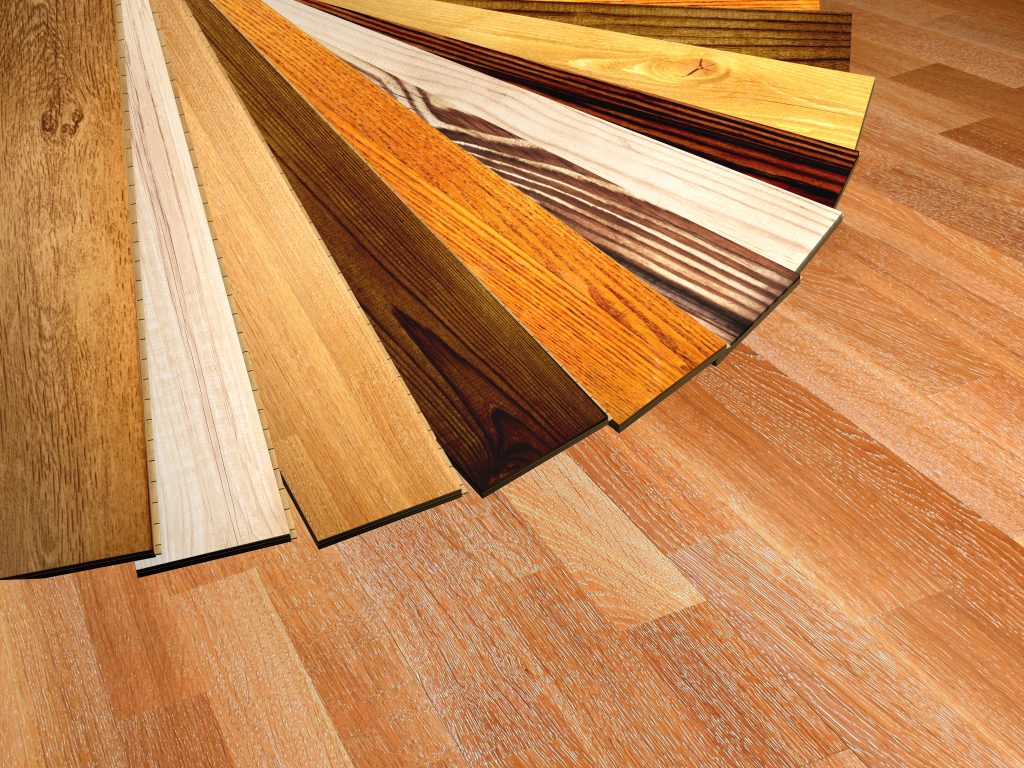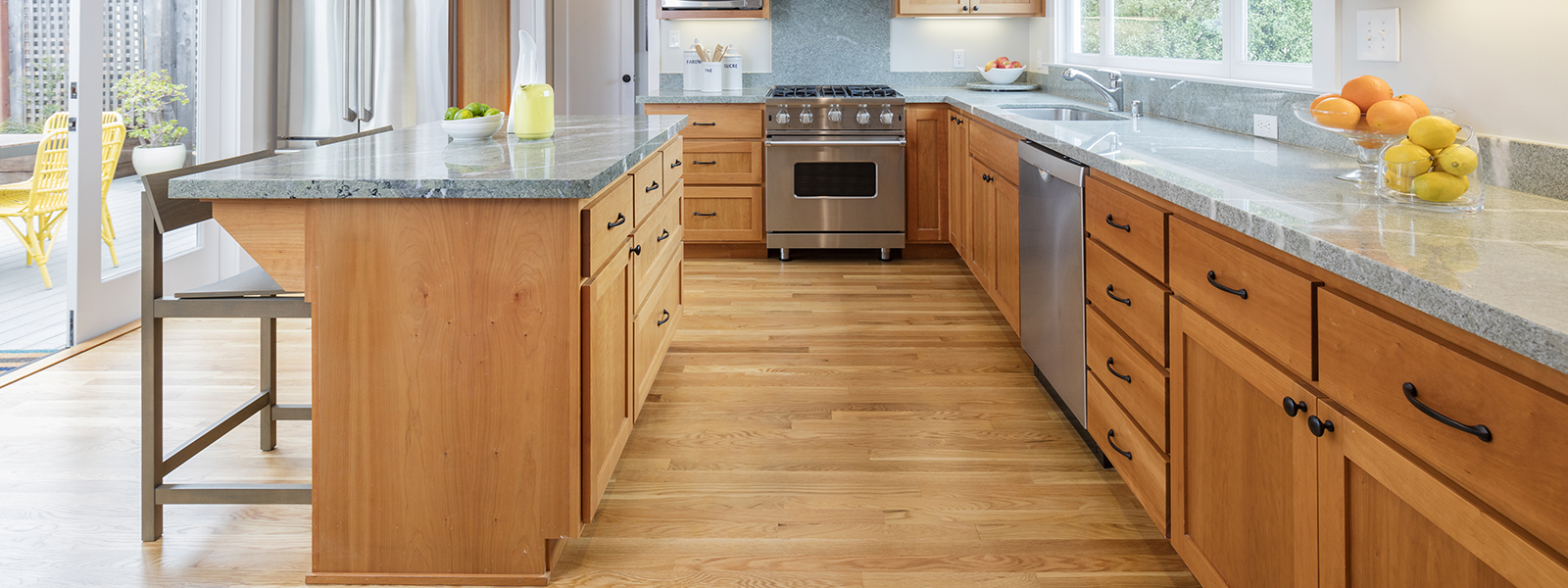
Choosing to install hardwood floors is an exciting step in making your home feel warm, inviting, and uniquely yours. But once you start browsing your options, you’re faced with a big question: Which wood species is right for my space?
Different types of wood bring their own unique personalities to a room. Some handle the daily hustle of kids and pets beautifully, while others offer a sleek, modern luxury. To help you narrow down your choices, let’s break down the most popular domestic wood species used in hardwood flooring, how they perform, and what you can expect when it comes to your budget.
The Big Four: Comparing the Most Popular Species
1. Oak (Red & White) – The Timeless Standard
Oak is the most popular hardwood flooring for a reason. It features strong, classic grain patterns that do a fantastic job of hiding minor scratches and dents from daily wear and tear.
- Red Oak has warmer, pinkish undertones and a more dramatic grain pattern.
- White Oak is slightly harder than Red Oak, featuring cooler, golden-brown tones and a linear grain that fits perfectly in contemporary, modern, or coastal designs.
2. Hickory – The Ultra-Durable Choice
If you have a busy household with heavy foot traffic, large pets, or kids tracking in desert grit, Hickory is your best friend. It is one of the hardest domestic woods available, making it incredibly resistant to dents. Visually, Hickory is famous for its high contrast, showing off beautiful variations between light creams and deep, dark browns. It looks spectacular if you love a rustic or character-rich aesthetic.
3. Maple – The Clean & Modern Option
Maple offers a very different look from Oak or Hickory. It has a much smoother, subtle grain pattern, creating a clean, consistent canvas across your floor. Because it’s so uniform and light in color, it makes spaces feel large, bright, and airy. It’s a favorite for minimalist and Scandinavian-inspired homes.
4. Walnut – The Luxurious Showstopper
Walnut is a softer wood, but what it lacks in pure hardness, it more than makes up for in pure elegance. It features deep, rich chocolate-brown tones and stunning, swirling grain patterns. Because it can scratch a bit easier than Oak or Hickory, it’s best suited for lower-traffic areas or households looking for a high-end, sophisticated look.
How Do They Wrap Up in Cost?
Your overall investment depends on whether you opt for solid or engineered construction, plank width, and your specific subfloor needs. However, the species itself plays a major role in raw material pricing. Here is how they generally compare from most budget-friendly to premium:
| Wood Species | Relative Cost | Best Suited For |
|---|---|---|
| Red Oak | $ (Most Budget-Friendly) | High-traffic family homes, versatile design styles, and excellent overall value. |
| White Oak | $$ (Moderate) | Modern, contemporary, or transitional homes looking for neutral, trendy tones. |
| Maple | $$ (Moderate) | Bright, minimalist spaces where a clean, subtle grain pattern is preferred. |
| Hickory | $$$ (Moderate to High) | Busy households requiring maximum dent resistance and a bold, rustic look. |
| Walnut | $$$$ (Premium) | Luxurious spaces, formal rooms, and homeowners wanting deep, natural dark wood tones. |
Note: Supply chain availability and current market demand can cause species pricing to fluctuate, but Oak consistently remains the benchmark for affordability, while Walnut is valued as a premium luxury choice.
Balancing Hardness and Practicality
When comparing these woods, a great industry tool to keep in mind is the Janka Hardness Scale. It measures how much force it takes to embed a small steel ball into the wood. The higher the number, the more resistant the wood is to dents.
- Hickory: ~1,820 (Toughest against impact)
- Maple: ~1,450 (Strong and resilient)
- White Oak: ~1,360 (Excellent daily durability)
- Red Oak: ~1,290 (The industry benchmark for strength)
- Walnut: ~1,010 (Softer, best treated with a bit more care)
Keep in mind that hardness isn’t everything! A highly figured grain (like Oak or Hickory) is incredibly forgiving because it naturally hides minor surface scuffs, whereas a very smooth wood (like Maple) will show them more easily in direct sunlight, even though the wood itself is technically harder.