When you live in the Phoenix Valley, you know that the climate dictates almost every choice you make for your home—from your AC unit to your landscaping. When it comes to flooring, the “Solid vs. Engineered” debate is a big one.
While solid hardwood remains the gold standard for many—offering a lifetime of character and the ability to be refinished for generations—engineered wood has emerged as a high-performance partner for desert living.
Here is why engineered wood is such a strong contender for your Phoenix home.
Built for the “Dry Heat”
The biggest challenge for any wood floor in Arizona is the low humidity. Wood is a natural material that reacts to moisture; in our bone-dry summers, solid wood planks can sometimes shrink, leading to tiny gaps between boards.
Engineered wood is engineered for stability. Its multi-layer core is designed to resist that natural urge to shift or shrink. This means that even when the humidity hits single digits, your floors stay tight, flat, and beautiful.
The Concrete Connection
Most homes in our neck of the woods are built on concrete slabs. Installing solid wood on concrete requires a bit more prep work to manage moisture and attachment.
Engineered wood, however, was practically made for concrete. Its structural design allows it to be installed easily over slabs, making it a versatile and cost-effective way to get that authentic wood look in any room of the house.
Performance Without Compromise
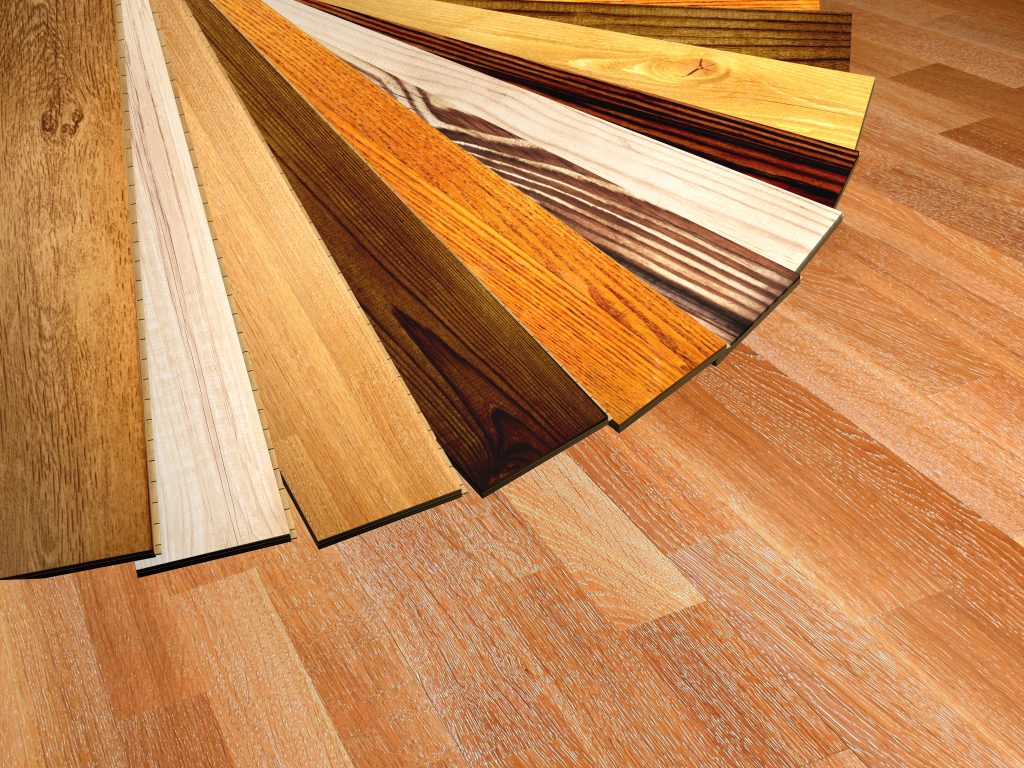
Choosing engineered wood doesn’t mean you’re settling for “imitation” wood. The top layer is 100% genuine hardwood. You get the same rich grains, knots, and textures of Oak, Walnut, or Hickory, but with a “backbone” that is better suited for the high-temperature fluctuations we see in the Southwest.
Which is Right for You?
- Solid Hardwood is perfect if you want a floor that can be sanded and refinished many times over the next 50 to 100 years. It’s an investment in the long-term history of your home.
- Engineered Wood is the go-to for those who want maximum stability against the desert dry-rot and a seamless installation over concrete subfloors.
